The synergy between the Malay kitchen and the apothecary’s dispensary is so seamless that, historically, the line between food and medicine was almost non-existent. In Malay culture, the kitchen is the first pharmacy; the daily act of cooking is an act of preventative medicine. The basic ingredients found in a standard Malay kitchen—known collectively as rempah or herba—are the very same substances the Bomoh would prescribe to treat illness, reinforcing the philosophy that health begins with what is consumed. Though the bomoh is commonly associated with mystical approach but the twist to the meaning is that the health practitioner back then. The bomoh, midwife (bidan), used natural remedy grown in the deep forest or even from their backyard as stated by a group of UKM’s researchers.
There are four musketeers of Malay aromatics: ginger (halia), galangal (lengkuas), turmeric (kunyit), and lemongrass (serai). While these provide the foundational flavors for rendang or masak lemak, their presence in the kitchen is strategic. Turmeric is prized by the traditional apothecary for its powerful anti-inflammatory and antiseptic properties, often used in jamu to cleanse the blood. Similarly, lemongrass and ginger are not merely flavor enhancers; they are carminatives used to “expel wind” (buang angin) from the body, a central concept in Malay humoral pathology.
Furthermore, ingredients like garlic (bawang putih) and black pepper (lada hitam) serve a dual purpose as culinary staples and natural antibiotics. Even the use of coconut oil and tamarind (asam jawa) mirrors the apothecary’s toolkit—the former as a cooling base for ointments and the latter as a digestive aid and fever reducer. This integration ensures that every meal serves as a holistic treatment, transforming the domestic kitchen into a site of daily ritual healing. In the Malay tradition, the apothecary’s wisdom is not locked away in an old book; it is seasoned into the food, ensuring that the community is nourished and medicated simultaneously.
Here are 12 herbs/materials that are staple to Malay’s kitchen:
- Turmeric (Kunyit)
- Ginger (Halia)
- Galangal (Lengkuas)
- Lemongrass (Serai)
- Garlic (Bawang putih)
- Shallot (Bawang merah)
- Tamarind (Asam jawa)
- Cinnamon (Kayu manis)
- Clove (Bunga cengkih)
- Black pepper (Lada hitam)
- Pandan
- Fenugreek (Halba)
| Herb / Material | Use as Cooking Ingredient | Use in Treating Ailments (Traditional Malay Medicine) |
|---|---|---|
| 1. Turmeric (Kunyit) | Adds colour and earthy depth to curries, gulai, ayam masak kuning, rice | Anti-inflammatory; used for wound healing, postpartum recovery, digestive health |
| 2. Ginger (Halia) | Flavour base for soups, stir-fries, tea, rendang | Warms the body; treats bloating, nausea, colds, improves circulation |
| 3. Galangal (Lengkuas) | Aromatic backbone in laksa, rendang, curries | Used for stomach discomfort, skin infections, and to reduce internal “wind” |
| 4. Lemongrass (Serai) | Fragrance enhancer in soups, sambal, grilled dishes | Treats fever, headaches; used in steam baths and herbal baths |
| 5. Garlic (Bawang Putih) | Essential seasoning in almost all savoury dishes | Antibacterial; supports immunity, blood pressure regulation |
| 6. Shallot (Bawang Merah) | Sweet base note in sambal, tumis, sauces | Applied to reduce fever in children, improve digestion |
| 7. Tamarind (Asam Jawa) | Provides sourness in asam pedas, sambal, sauces | Used as mild laxative, fever reducer, cooling agent |
| 8. Cinnamon (Kayu Manis) | Sweet spice in desserts, drinks, some savoury dishes | Improves blood circulation, supports blood sugar balance |
| 9. Clove (Bunga Cengkih) | Used sparingly in rice dishes, drinks, spice blends | Relieves toothache, aids digestion, antiseptic |
| 10. Black Pepper (Lada Hitam) | Adds heat and complexity to marinades and soups | Improves digestion, relieves coughs, increases nutrient absorption |
| 11. Pandan | Aroma for rice, desserts, beverages | Used to reduce fever, ease headaches, calm the body |
| 12. Fenugreek (Halba) | Added to certain traditional dishes and spice mixes | Supports lactation, balances blood sugar, aids postpartum recovery |
Featured product:
Printable practical reference guide for Malay’s kitchen
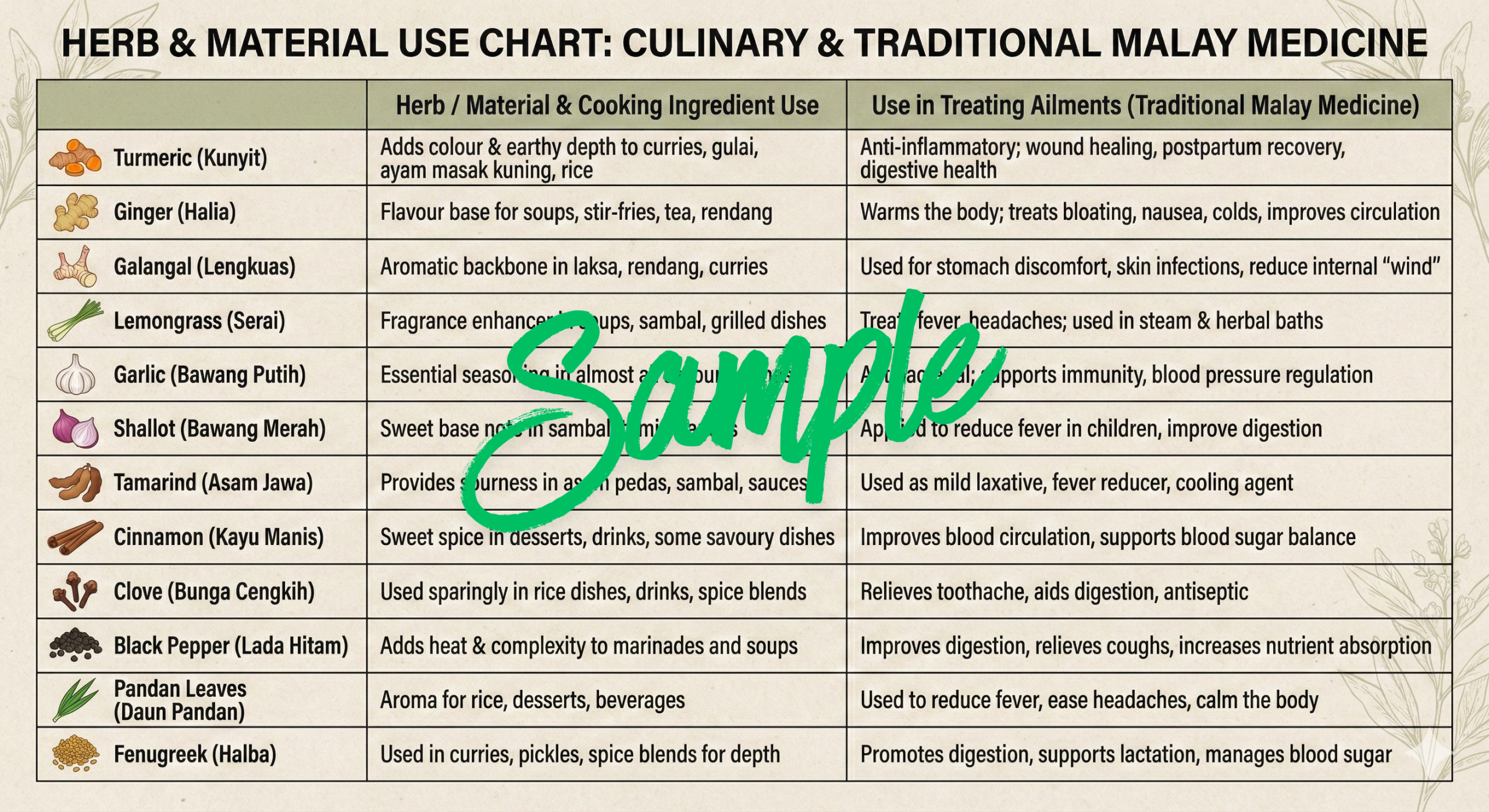
12 herbs for Malay’s kitchen and home remedy
The Malay Apothecary Kitchen Chart is both a beautiful piece of kitchen art and a practical reference guide.